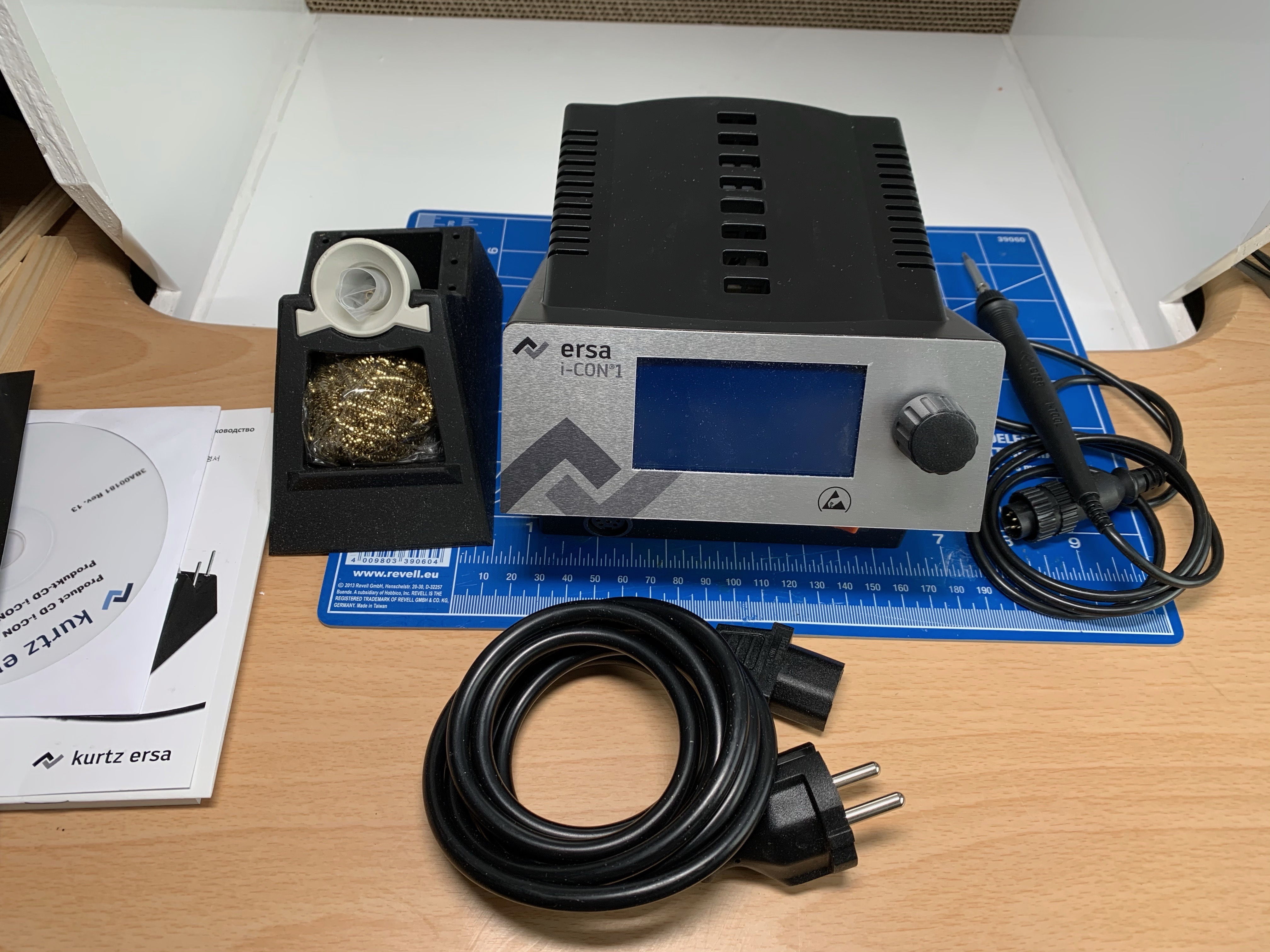
Around the time I was in Year 4 of primary school, I became fascinated by soldering. Through my parents’ connections, I went up to the room of a young man named Moriba-san, who was lodging neighbor’s house, and he demonstrated it for me. I’m grateful to young Moriba for struggling to show me how to do what, in hindsight, was a difficult request from a clueless kid: attaching lead wires directly to A-size battery. When I asked where I could buy them, his answer – “a hardware shop” – A shop selling buckets or something like that – was typical of the times. That kid went on to buy a cheap soldering iron at Ninomiya-musen in Sannomiya and started making radios. I continued electrical tinkering as a hobby through secondary school, but being broke, I stuck with cheap soldering irons using nichrome heating elements. After starting work, I used it far less often, but with the leisure of a single, I bought the HAKKO 936 I’d admired in my student days. Its adjustable temperature setting proved very convenient. He brought the 936 with him when he moved to Germany, using it with a step-down transformer. However, as he grew older and his memory started failing, he’d forget to switch it off before leaving his seat. His hands also began to shake, making him want a newer model with a shorter iron. Finally, thinking ‘well, I’m in Germany now,’ he found a brand-new surplus German-made ERSA i-CON1 and clicked ‘buy’. Apparently, it’s the company that developed the world’s first electric soldering iron. Back in Japan, I’d often heard of WELLER but never knew about Ersa – I think this one looks rather smarter.
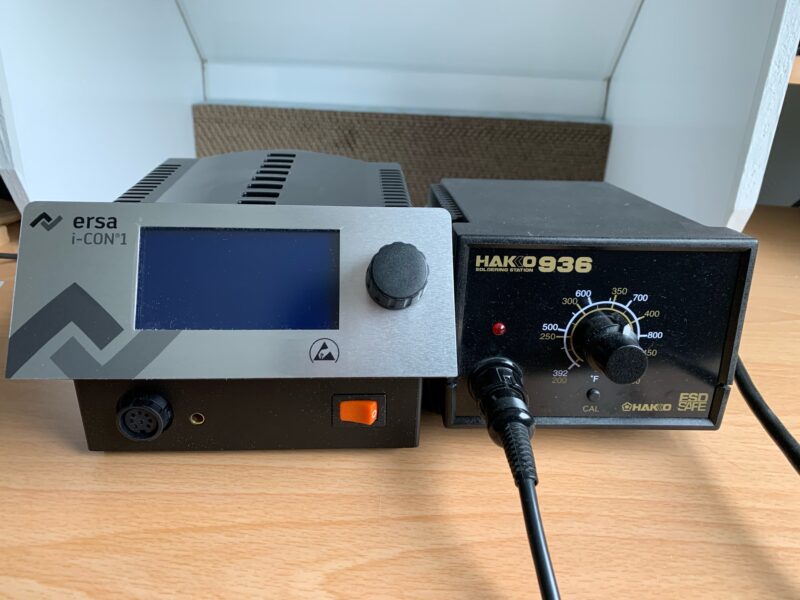
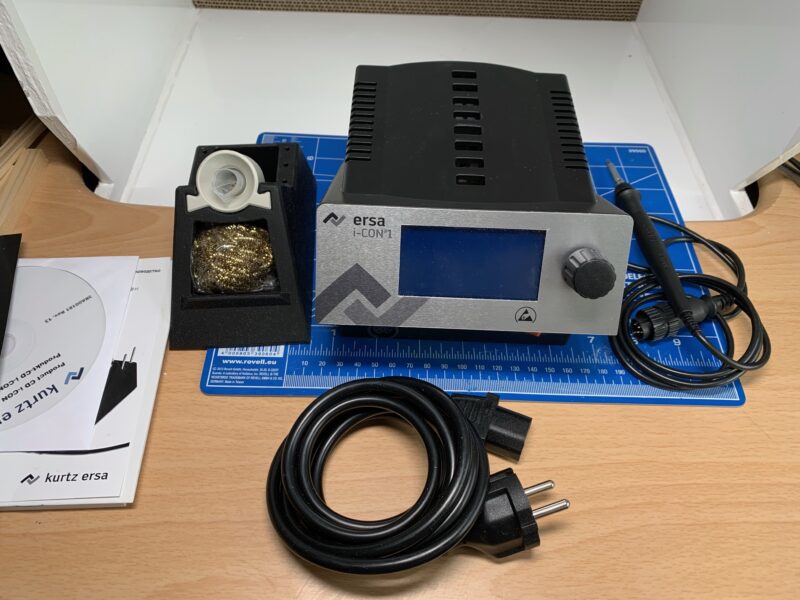
This is Ersa’s professional station soldering iron system, the i-CON 1. While smaller stations like the Pico or Nano exist for amateur use, I was utterly smitten by this one’s sleek design and snapped it up immediately. Flick the orange power switch at the bottom right of the unit, then it powers up in under ten seconds. Temperature settings can be adjusted in real-time via the rotary knob on the right and can also be stored in memory. The iron incorporates a motion sensor; if left idle for a moment, it cools down to around 170 degrees to protect the tip. However, lifting the iron causes it to return to the set temperature within about two seconds, so it’s not at all bothersome. Furthermore, if left unused for several minutes, it automatically powers down – making it utterly safe for forgetful old chaps like me. In fact, within the first month of owning it, I already had a near-miss: “After returning from a walk, I realised I’d forgotten to switch off the i-CON1.” It’s already proving its worth.
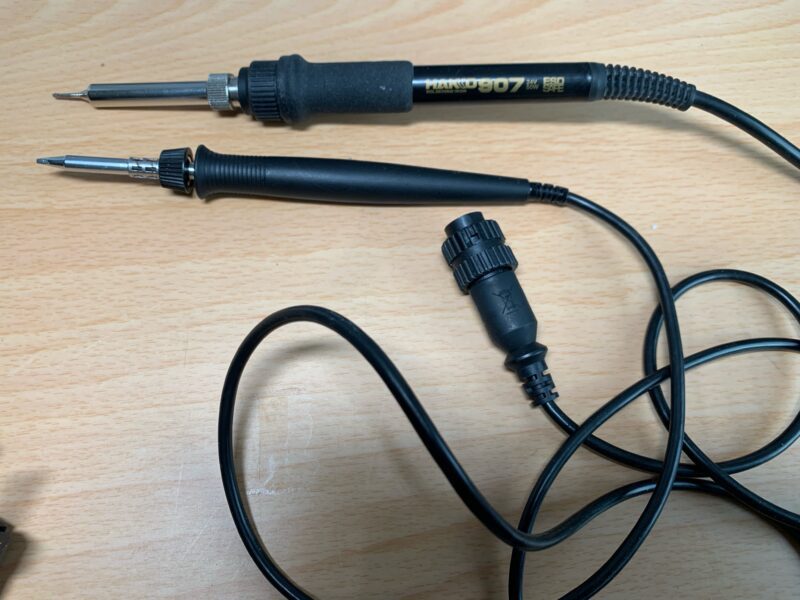
The soldering iron hand piece is astonishingly small and light, and the cable is so slender – the ease of handling is simply superb! The tip is close to the handle, making it very easy to use. The body’s 80W or heater output 150W – the various labels are confusing, but attaching a larger tip gives it tremendous power. Even with a massive terminal and a thick cable, the solder flows smoothly. The tip is easily swapped by loosening the black resin nut, and as long as you don’t touch the metal parts, it’s fine even if it gets a bit hot.
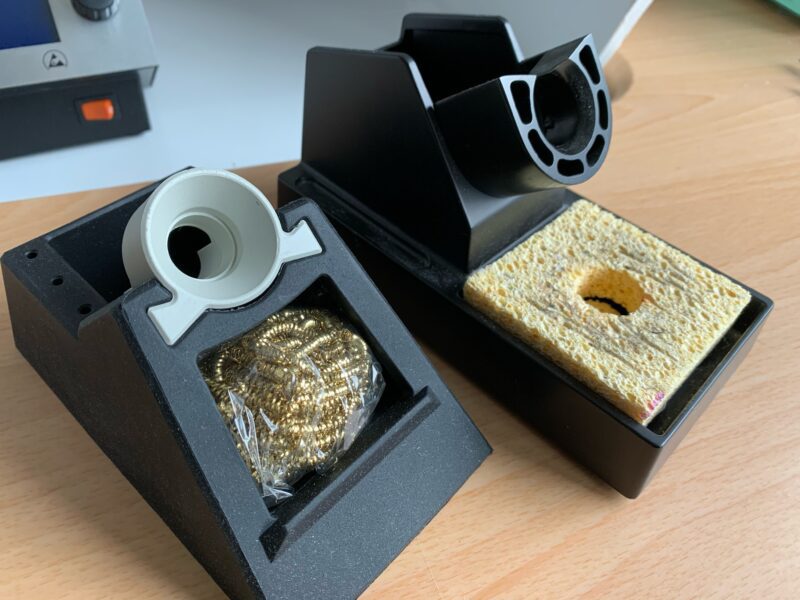
The right is a resin HAKKO, the left is, surprisingly, a rubber Ersa soldering iron stand. The cleaner is a sort of metal scourer, and I’ve actually found this to work rather well. The black part is soft rubber, but the white section is heat-resistant ceramic or something similar, so you needn’t worry about placing the iron on it. The hole at the back can hold pins or spare soldering tips.
Having splashed out on a top-of-the-range soldering iron that leaves nothing to complain about, it’s now down to my own skill… Back in high school, I was soldering almost daily for club activities, but having hardly touched it recently, my technique is dreadful – I’ve been piling on the solder clumsily and even scraping off the patterns on cheap circuit boards. I’m still learning.
Comment